
The Rapids Are Bigger in Spring. So Is the Thing Nobody Plans For.
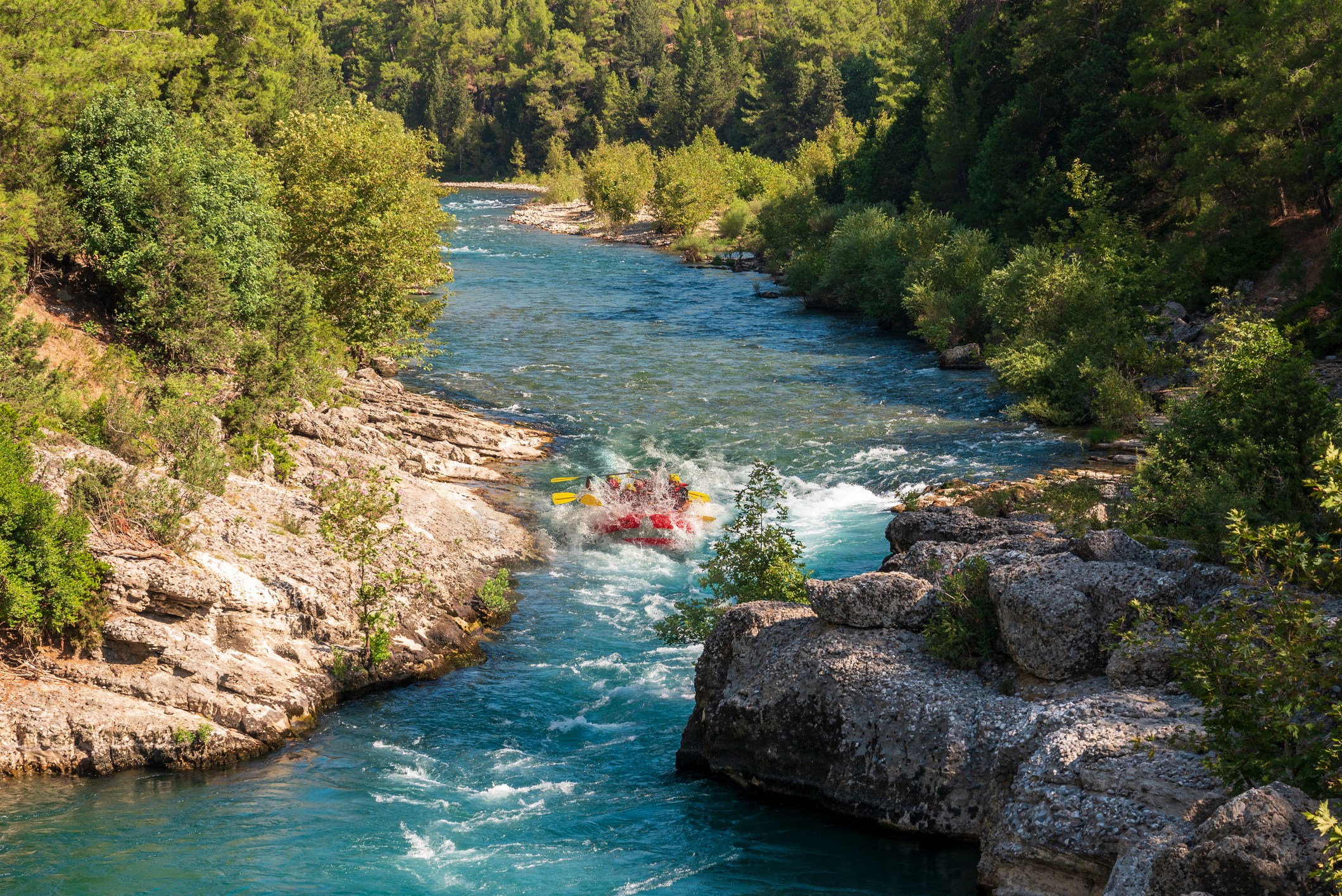
Ask a first-time guest what worries them about an early-season trip and they will say the rapids. Ask a guide and they will say the water temperature. Snowmelt is what gives a May river its volume, and snowmelt is, by definition, water that was a snowbank last week. Understand that before you book a spring date, because the fix is easy and the surprise is not.
Quick Summary: Key Takeaways
- Cold shock is a real physiological response, not toughness: it hits breathing and heart rate in the first minutes of immersion.
- It does not need freezing water: the National Weather Service puts water at 50 to 60°F in the same bracket as water at 35°F for cold shock.
- We hand out the gear at no extra cost: wetsuits, fleece base layers and splash jackets on spring and cold-weather trips, on top of the helmet, life jacket and paddle everyone gets.
- A full change of dry clothes matters as much as the wetsuit: shoes included, left in the car at the meeting point where the day ends.
- Pick July if you would rather swim: warm air, warm water and moderate flows, at the cost of the biggest rapids.
What Cold Shock Does, and Why 55°F Is Enough
Going into cold water suddenly produces an involuntary gasp and a burst of rapid breathing. That is the dangerous part, because a gasp underwater is how a confident swimmer gets into trouble in calm conditions, let alone in moving water.
The number that surprises people is how warm the water can be and still do this. The National Weather Service states that cold shock can be just as severe and dangerous from water temperatures of 50 to 60°F as it is from water at 35°F, and that the gasp response can be triggered by water as warm as 77°F. Sierra snowmelt in May sits well inside that first range.
None of this makes spring rafting dangerous. It makes insulation and a life jacket the two things that matter most on a spring trip, and it is the reason a guide’s safety talk in May is longer than the one in August.
What We Give You, and What You Wear Under It
Every guest on every trip gets a helmet, a personal flotation device and a paddle. On spring and cold-weather trips we also hand out wetsuits, fleece base layers and splash jackets, and none of that carries an extra charge.
A wetsuit works by holding a thin layer of water against you and letting your body warm it, and a splash jacket stops the wind from stripping that warmth away between rapids. Together they turn a cold day into a comfortable one. What they cannot overcome is a cotton t-shirt underneath, which soaks, stays soaked and pulls heat out of you for the rest of the run. Wear synthetic or wool against the skin and bring a full change of dry clothes for afterward, including shoes.
Footwear is the other thing to get right: secure sandals with a heel strap, old sneakers, or neoprene booties. Flip-flops end up in the river on the first rapid.
A hat helps more than people expect, since a wet head loses heat quickly and a thin beanie fits under a helmet without a fuss. Bring sunglasses on a retainer too. Spring sun off wet rock and whitewater is strong, and a pair that goes overboard on the first big wave is a pair you will miss for the rest of the day.
→ Truckee River, Boca to Floriston run
Choosing Your Month With This in Mind
The decision is a straight trade, so make it deliberately instead of by default.
Late May into early June gives the biggest water of the year, because that is when the snowmelt peaks. It is also the coldest water of the year, and it is the window experienced paddlers plan around. July and August give warm air, warm water and moderate flows, and that is where we put families who intend to swim at lunch. September gives the emptiest rivers of the season.
If you are bringing a group with a wide spread of ages or nerves, a summer date removes a variable. If you are coming for the Tunnel Chute at full flow, you are coming in spring and you should pack accordingly.
→ Middle Fork American, Tunnel Chute run
One practical note for the American River trips: you park at the meeting point and ride our buses down to the put-in, then get collected at the take-out. That matters in spring, because the dry clothes you left in the car are waiting for you where the day ends.
→ Our Pilot Hill base on the American River
Your Month Decides What Kind of Trip You Get
Choosing the river is only half the decision. The month decides whether you get the big cold version of it or the warm forgiving one, and both versions are good for different reasons. Pick on purpose and pack for what you picked.
Our Truckee base is at 10550 Stampede Meadows Road in Truckee; the American River base is at 4531 Salmon Falls Rd in Pilot Hill. Trips book through gowhitewater.com.