
Class 3 Rapids and Beyond: What a Rapid’s Class Asks of You in the Boat
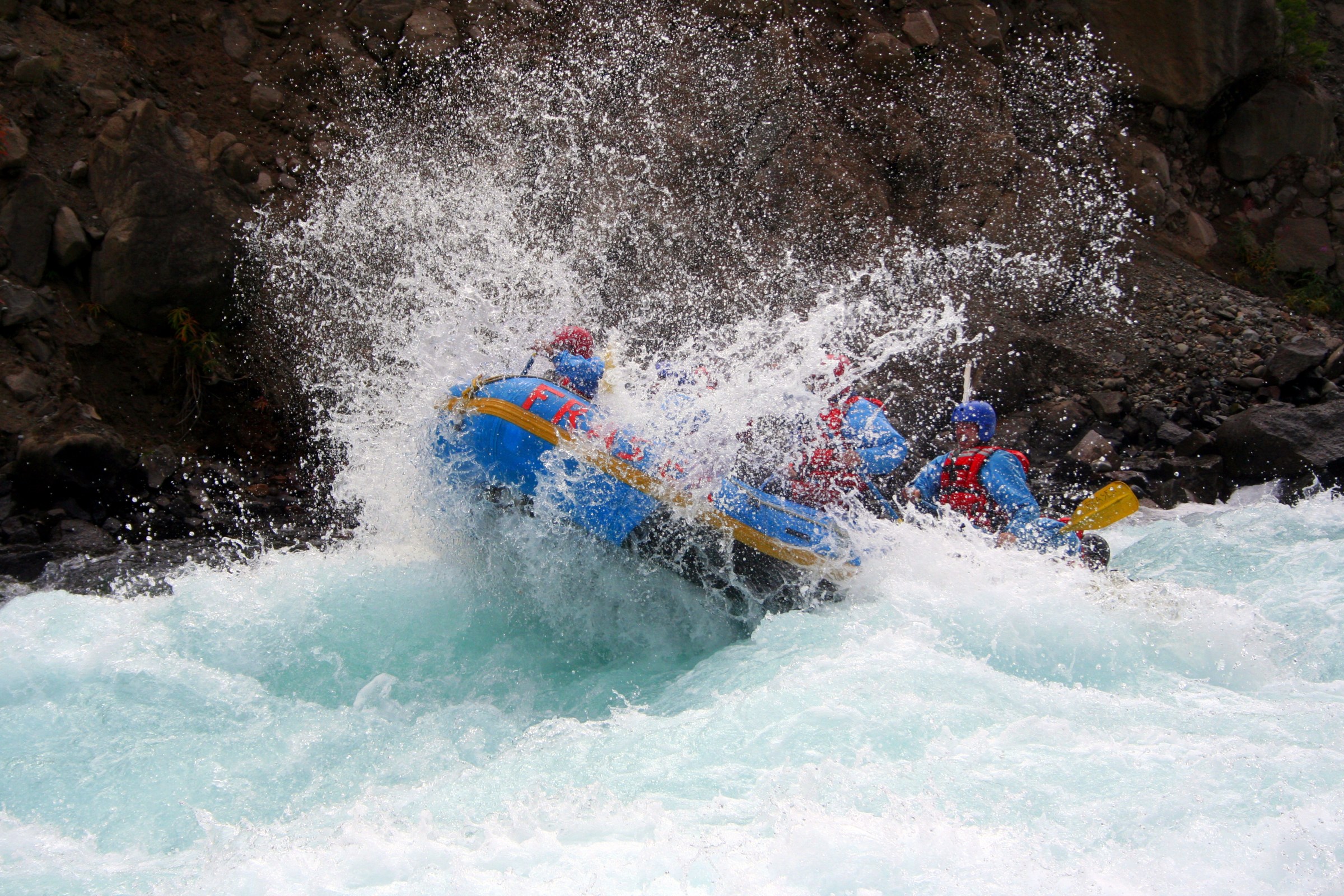
A river rating looks like a thrill meter, but it measures something else. Printed on a trip page, the class tells you how hard the water is to run, and that decides what you’ll do with a paddle, how likely a swim is and why an outfitter sets weight and age rules. Class 3 rapids are where your paddling starts to matter, and since our rivers stay quiet until spring, winter is a good time to work out which class your group is ready for.
Quick Summary: Key Takeaways
- The class rates the water: American Whitewater’s scale starts at Class 1, very easy, and reaches expert water at Class 5.
- Class 3 means paddling on command: large waves and features that the crew has to steer around with the guide.
- Class 4 adds consequences: a swim is rougher and self-rescue is harder, and our Class IV+ trips start at age 13.
- Some rules cover every trip: each guest must weigh 250 pounds or less and be able to paddle and help in their own rescue.
The International Scale of River Difficulty Rates the Water
American Whitewater publishes its version of the International Scale of River Difficulty inside a safety code first adopted in 1959 and revised in 2024. It describes the river at each level, from very easy riffles and small waves at Class 1 to easy rapids that need some maneuvering at Class 2. It isn’t exact. American Whitewater says so itself.
Outfitters write the classes in Roman numerals. Class 3 and Class III are the same water. What the class leaves out is you. A number can’t know how fit your crew is, how cold the river runs that day or whether anyone has sat in a raft before, so our guides fill that gap with a safety talk before any trip we run leaves the shore.
→ whitewater rafting tours near Tahoe
Class 3 Rapids Ask You to Paddle When the Guide Calls It
American Whitewater rates Class 3 as intermediate water, with large waves and features you have to maneuver around with skill, which in the raft means you paddle hard, on command, the moment the guide asks. Your guide steers from the back, while paddlers supply the power that lets the boat cross a current or slip past a hole instead of bouncing off it. Everyone paddles.
Some guests do end up swimming. Our own trip guidance describes Class III swimmers as shaken but typically fine, though nobody would call a swim through one ideal. On the Truckee River Boca to Floriston run, the Floriston Gorge is rated Class III+, with Jaws and Pinball waiting near the end of a seven-mile trip that starts in gentle boulder gardens. That plus marks the hard end of Class III. Kids from age 7 run it.
→ Truckee River Boca to Floriston run
Class 4 Rapids Raise the Stakes of a Swim
At Class 4, the scale calls the water “difficult,” with powerful rapids and hazardous features that demand precise moves. A late stroke can put the boat in the wrong slot, and a swim stops being a funny story, because self-rescue gets harder in powerful water and the risk of injury climbs with it.
American Whitewater draws a distinction worth knowing: running the odd Class IV rapid is less demanding than spending a whole run at that level. Take the Middle Fork American. Rated Class IV+, it opens with the Tunnel Chute, a narrow rock channel into a 90-foot tunnel, settles into Class II–III wilderness miles, then steepens again through Kanaka and Chunder. Everyone on it must be at least 13 and a strong swimmer.
→ Middle Fork American Tunnel Chute trip
Class 5 Rapids Sit Near the Limit, and Ratings Shift With the Water
Class 5 is expert water. American Whitewater calls it “very difficult,” with long, turbulent rapids close to the limits of what a boat can run, and our trips top out at Class IV+. Above it sits Class VI, water most people treat as unrunnable, and on the Middle Fork our trip carries the rafts around Ruckachucky Falls, a Class VI drop, rather than running it.
A rating isn’t fixed. American Whitewater warns that a river’s difficulty can change with water level, downed trees, floods or weather, and it asks paddlers to leave extra margin when the water is cold or the flow is high. We do the same: on a big snowpack year, early North Fork flows can be too high, and those trips may move to the South Fork instead.
→ choosing the right rafting trip for your group
Weight, Age and Swimming Rules Are Built Around the Swim
Every guest must weigh 250 pounds or less. That limit is about safety and gear fit, since helmets and life jackets only do their job when they fit the body wearing them. Everyone also has to be fit enough to paddle the whole way and, after a fall into the river, able to take part in their own rescue.
Age limits climb with the class. Our Class II–III trips take kids from 7. Both Class IV+ runs, the Middle Fork and North Fork, start at 13. Strong swimming and earlier whitewater experience are highly recommended for each, and on the Middle Fork strong swimming is required. On easier runs, swimming isn’t required, since every guest wears a Type V Coast Guard-approved life jacket, but anyone who isn’t a strong swimmer should stay at Class III or below. Tell the office first.
→ rafting weight and swimming rules
Frequently Asked Questions
Q: What does Class III+ mean in rafting?
A: It marks the hard end of Class III. Our Truckee River Boca to Floriston run finishes in the Class III+ Floriston Gorge, and the South Fork American is rated Class II–III+.
Q: How old do you have to be to raft class 4 rapids?
A: Thirteen, on both of our Class IV+ trips. Strong swimming and earlier whitewater experience are highly recommended, and the Middle Fork requires strong swimmers.
Q: What is the hardest class of whitewater rapids?
A: Class 5, for most paddlers. Class VI sits above it, but that water is generally treated as unrunnable, and our own trips stop at Class IV+.
Plan Next Summer’s Class Over the Winter
Tell us your group’s ages, how well everyone swims and whether anyone has rafted before, and we’ll match a class to the crew. Expect a straight answer. Every trip page on gowhitewater.com prints its class beside the minimum age and river miles.