Chamberlain Falls Only Runs on Snowmelt — What the North Fork American Asks of You
Some rivers wait for you. The North Fork American does not. It has no dam upstream holding water back for a July release, so its season is written by the Sierra snowpack and it is usually over by the end of June.
That short window is why the North Fork American stays a bucket-list run rather than a summer default. Class IV+, continuous, technical, with the Chamberlain Falls rapid early in the run. We take paddlers down it who already know what a river feels like, and the honest version of this article is about whether that is you next spring — not whether the trip sounds fun.
Quick Summary: Key Takeaways
- Snowmelt only: the North Fork has no dam storage, so it typically runs in May and June and ends when the runoff does.
- Class IV+ is a step up: continuous rapids and consecutive drops, with real consequences for a swim.
- Fitness is the entry requirement: you paddle hard, and you must be able to take part in your own rescue.
- Winter decides the window: a thin snowpack shortens the season, and 2026 was a hard example of that.
- Build up first: the Truckee and the South Fork are the right places to earn this one.
A natural-flow river gives you a window, not a schedule
How much snow falls in the Sierra between December and March is what determines whether the North Fork gets a long spring or a short one. In 2026 it was short: the California Department of Water Resources reported a statewide snowpack at just 18 percent of average on April 1, the second lowest April reading on record, after a hot March melted it out weeks ahead of schedule.
A winter like that compresses everything. A generous one does the opposite and can hold the run deep into June, which is the difference between a season with a dozen good weekends in it and a season with three.
We watch it all season and we will tell you honestly what the water is doing. What we will not do is promise you a date in February for a river that has not been snowed on yet.
Class IV+ changes the job description for everyone in the boat
On a Class III river the rapids arrive with pools between them. You catch your breath. The guide resets, and a mistake usually costs you nothing worse than a laugh and a wet seat for the next twenty minutes.
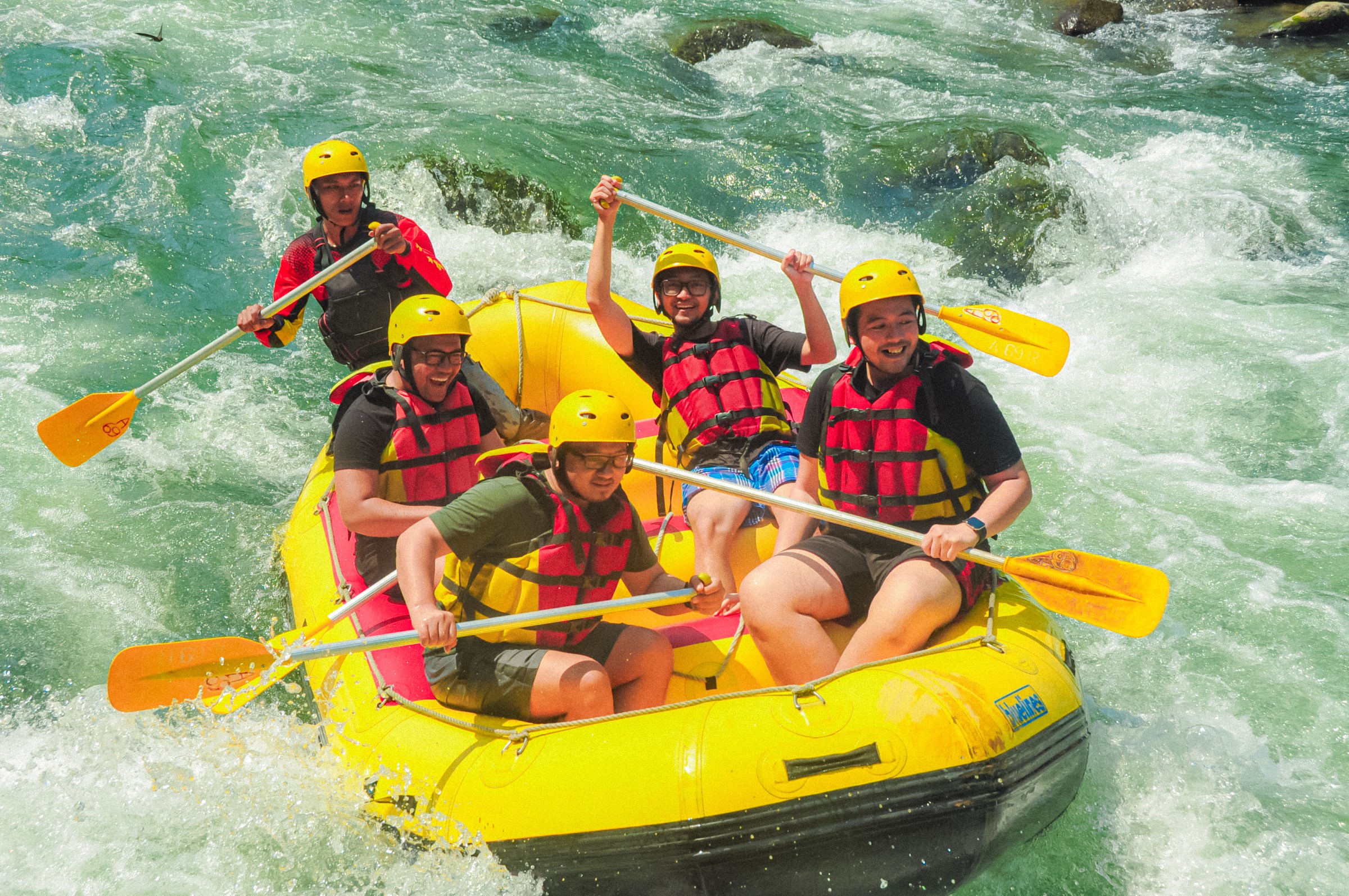
Class IV+ is continuous. The rapids link together, the lines are narrow, the water is pushy and cold with spring runoff, and there is far less room to recover between them. Guides give more commands and expect them followed immediately, because the boat’s position going into the next drop depends on the last three strokes.
You are crew. Not a passenger.
→ the South Fork American Gorge Run
Who we want in the raft on this one
Previous whitewater experience, honestly assessed. Real fitness. You will paddle for most of the day rather than in bursts, and you need to be able to self-rescue if you come out of the boat — that last one is the requirement everyone underestimates.
Minimum age on this run is thirteen. Our standard limits apply as well: guests must weigh no more than 250 pounds so the gear fits and works as designed, and everyone must be in good health and able to follow their guide’s commands under pressure.
Talking yourself into it? Run something else first and come back next year.
→ guided rafting trips on five rivers
Spend the winter getting ready rather than waiting
There is a version of preparation that actually helps, and it is not complicated. Swim in cold water if you have access to it, so the gasp reflex is not new to you in May. Do something that builds shoulders and core. Learn what a paddle command sounds like on an easier river.
The Truckee’s Boca to Floriston run is the obvious training ground — seven river miles of progressive Class III+ with rapids called Jaws and Pinball, at $128.40 for adults. A full day on the Middle Fork American with the Tunnel Chute is the natural next rung, from $187.25 and open to ages thirteen and up.
Two seasons of that and the North Fork stops being a leap. It becomes the obvious next step.
→ Middle Fork American and the Tunnel Chute
Booking a snowmelt run means staying flexible
Hold two candidate weekends rather than one. Keep them close together in late May or early June, and be honest with yourself about the drive. Our cancellation window is 48 hours: outside it you can move or cancel freely, inside it the reservation stands regardless of the reason.
We have been running these rivers since 1994 and we would rather move your date than put you on water that is wrong for your group. Ask us in April what the runoff is doing.
Frequently Asked Questions
Q: When can you raft the North Fork American River?
A: Typically May and June. The river has no upstream dam storage, so it runs on Sierra snowmelt and drops out once the runoff ends. A big snow year extends the window; a lean one shortens it sharply.
Q: How hard is Chamberlain Falls?
A: It is Class IV+, which means continuous, technical rapids with limited recovery between them and real consequences for a swim. It is a run for paddlers with previous whitewater experience and good fitness, not a first raft trip.
Q: What is the difference between Class III and Class IV rafting?
A: Class III rapids come with pools between them and forgive small mistakes. Class IV links rapids together with narrow lines, pushy water and far less room to reset, so the crew has to respond to commands immediately.
Q: Which river should I raft before attempting the North Fork?
A: The Truckee River Boca to Floriston run first, then a full day on the South Fork American or the Middle Fork American. Two seasons of Class III and III+ water is a sensible way in.
Ask us about next spring’s North Fork window
Get in touch over the winter and we will talk through your experience, your group, and what the snowpack is doing. If the North Fork is not the right call for next May, we will say so and point you at the run that is.
Tahoe Whitewater Tours — Truckee, CA 96161. Family-owned and running Northern California and Nevada rivers since 1994.
Website: gowhitewater.com